
3D printing fabrication centre at lake Tegernsee
Four printers under one roof: large format, multi-colour printing, two nozzles for support material that peels off cleanly, and a print queue that keeps running overnight. From one piece, made in Rottach-Egern.
3D-Druck
Not quite right? Custom request
Tell us what you need — your answers so far are already filled in.
Which part would you like to print?
Three short questions — then you know the next stepSTEPA vendor-neutral CAD format that carries the design geometry — unlike an STL, which is only a triangle mesh. Anyone who wants us to adapt a part should supply STEP..
Upload your file, see the price instantly
The configurator shows material, colour and price before you order.
- from €5
- in 3–5 working days
A real person reviews every request.
Configure a laser job
Choose material and size, upload your file, see the price instantly.
- from €8
- in 3–5 working days
A real person reviews every request.
Tell us briefly what you need
We send your answers along — a real person gets back to you.
A real person reviews every request.
What the print shop can do
Four printers, one print queue. This is what you get.
Large format up to 34 cm
Housings, brackets and functional parts up to 340 × 320 × 340 mm in one piece, in an enclosed chamber also in ABS and ASA.
Up to eight colours or materials
Eight spools are loaded and switch instantly. Logos, lettering and colour areas come off the printer finished, no painting.
Two nozzles, clean support
One nozzle prints the part, the second prints support that peels off cleanly afterwards. No material is lost when switching between nozzles.
Small batches overnight
Fifty brackets, a hundred clips, twenty housing lids. A plate changer starts the next print, even after the workshop has closed.
Effect surfaces
Carbon-fibre, diamond, galaxy and starry-sky surfaces straight off the printer, for NFC tags and review stands, for example.
Housings for electronics
Rugged housings in glass-fibre reinforced nylon, dimensionally stable and heat resistant, with screw bosses and cable glands.
How a job runs
1. Upload the file
Upload 3MF, STL or STEP in the configurator, choose material, colour and quantity.
2. See the price at once
The price appears immediately, calculated from print time, material and machine. No waiting for a quote.
3. Into the print queue
The job goes to the printer that suits it best and is free right now.
4. Inspection
We check dimensions and surface, remove support material and pack the part.
5. Pick up or have it shipped
Pick-up in Rottach-Egern or shipping. Small standard parts are often ready the same day.
The machine park
The machines behind the print queue.
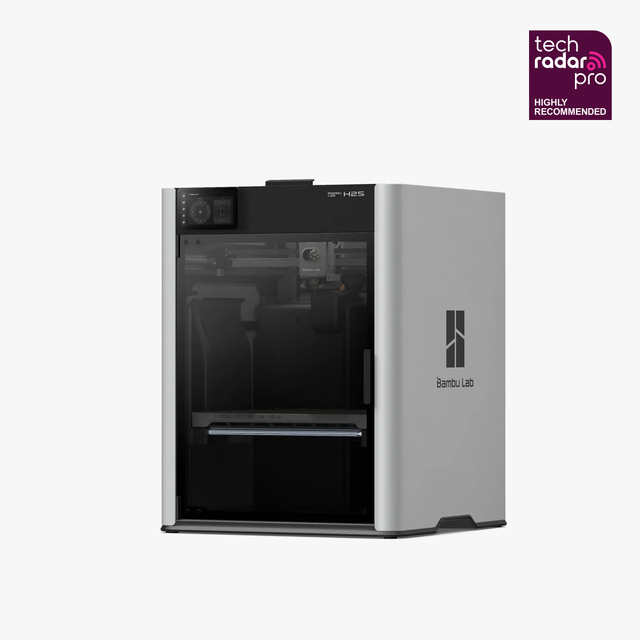
Bambu Lab H2S
Large format, enclosed chamber, dry box for technical filaments.
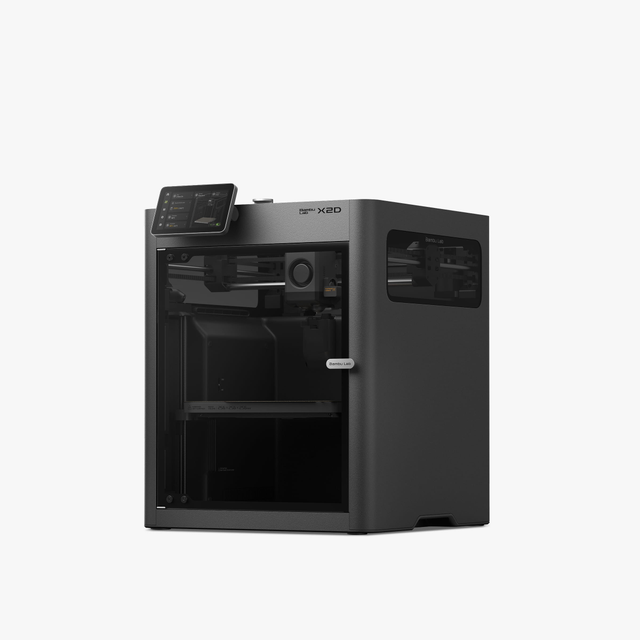
Bambu Lab X2D
Two nozzles, eight spools, dimensional check while printing.
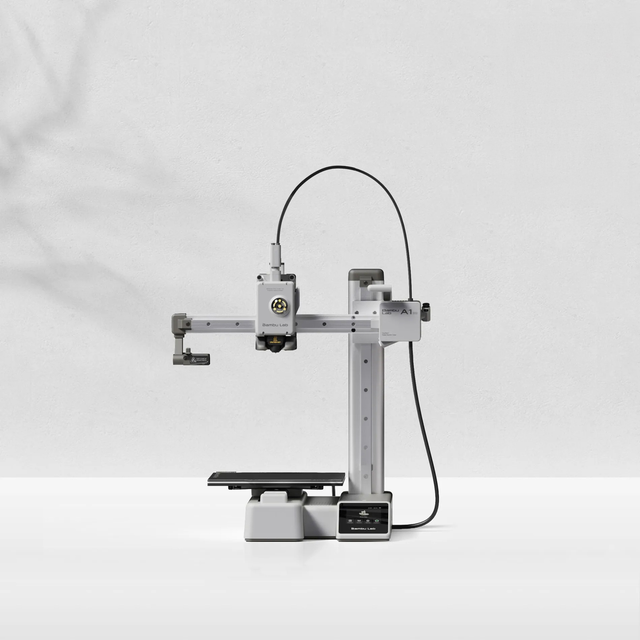
Bambu Lab A1 mini
Small parts in series with automatic plate changing.
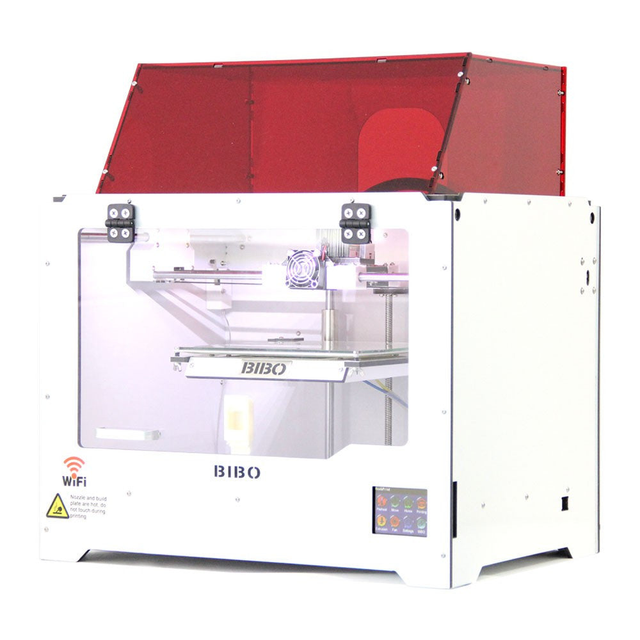
Bibo 2
Two-colour printing and laser engraving in one machine.
Three cases that come in regularly
From the trades: the spare part
A gear, a bracket, a handle on a machine no manufacturer supplies any more. We measure the broken piece and reprint it in PETG or ASA.
From the workshop floor: the jig
A stop, an assembly aid, an insert for a crate. Printed in PLA, usually finished the same day, and reprinted next time instead of drawn again.
From private customers: the repair
The snapped handle of a parmesan grater, the knob on a radio, the lid of a tin. A photo with a folding rule next to it is enough to start, we draw the file.
What 3D printing is good for
Not for everything — but for these four things nothing is faster.
Spare and special parts
The part that is no longer available: a bracket, a gear, a knob, an adapter. Rebuilt from a sample or a drawing.
Enclosures for electronics
Fitted around board, display and sockets — with screw bosses, light pipes and cable glands.
Jigs and fixtures
Drilling templates, assembly aids, go/no-go gauges, workholding — the classic workshop application.
Form studies and samples
Hold the part in your hand before a mould is built. Two iterations in one day is normal.
FDM material list — fused filament
FDM builds the part from a molten plastic filament. Material choice decides almost everything: a PLA bracket in a car warps in summer, a PETG one does not. The temperature column is therefore the most important one.
| Material | Temperature | Properties | Typical use |
|---|---|---|---|
| PLA | up to approx. 55 °C | stiff, very dimensionally accurate, brittle, low odour, bio-based | form studies, decor, indoor jigs |
| PLA+ / tough PLA | up to approx. 60 °C | tougher than PLA, does not snap as easily | brackets, enclosures without heat load |
| PETG | up to approx. 70 °C | tough, impact-resistant, resistant to chemicals and moisture | functional parts, containers, shaded outdoor parts |
| ASA | up to approx. 95 °C | UV and weather resistant, sandable and paintable | outdoor use, vehicle parts, garden equipment |
| ABS | up to approx. 95 °C | tough, smoothable with acetone, prone to warping | enclosures, parts that get post-processed |
| TPU 95A | up to approx. 70 °C | rubber-like flexible, abrasion and tear resistant | gaskets, dampers, grips, protective sleeves, feet |
| PA (nylon) | up to approx. 100 °C | very tough and abrasion resistant, absorbs moisture | gears, plain bearings, hinges, clips |
| PA-CF (carbon fibre filled) | up to approx. 110 °C | stiff and light, very dimensionally stable, matt finish | fixtures, drone parts, load-bearing brackets |
| PETG-CF / PLA-CF | as base material | stiffer and more accurate than the base material, matt | frames, gauges, visible technical parts |
| PC (polycarbonate) | up to approx. 115 °C | very strong and tough, transparent grades available | hot-running parts, light covers |
Resin material list
In resin printing a liquid resin is cured layer by layer with UV light. That gives a level of detail FDM cannot reach — at the price of brittleness and a smaller build volume. Our resin printer is being set up — we already take enquiries and confirm the delivery date with your quote.
| Material | Temperature | Properties | Typical use |
|---|---|---|---|
| Standard resin | up to approx. 60 °C | highest detail, smooth surface, brittle | miniatures, jewellery masters, appearance models |
| Tough / ABS-like resin | up to approx. 70 °C | tougher, does not snap immediately, slightly coarser | small functional parts, clips, enclosure lids |
| Flexible resin | up to approx. 60 °C | elastic, rubber-like | small-format gaskets, dampers |
| Water-washable resin | up to approx. 55 °C | cleanable with water instead of isopropanol, brittle | quick appearance models |
The two processes compared
| Criterion | FDM | Resin |
|---|---|---|
| Build volume | FDM up to 340 × 320 × 340 mm | Resin 218 × 123 × 235 mm |
| Layer height | 0.10–0.30 mm | 0.025–0.05 mm |
| Tolerance | ± 0.3 mm or ± 0.5 % (whichever is larger) | ± 0.1 mm |
| Surface | layers visible, sandable and paintable | smooth, layers barely visible |
| Strength | load-bearing, anisotropic (weaker across layers) | brittle, for appearance parts |
| Size | large parts possible, splittable and bondable | small to medium parts |
| Colour | many filament colours in stock | grey, black, transparent |
Not sure which material fits? Tell us where the part sits, what it carries and how hot it gets there — we take care of the material choice. A standard part in PLA or PETG is usually ready the same or next day.
File requirements
| Item | Requirement |
|---|---|
| Format | 3MF preferred (it carries unit and orientation), otherwise STL or OBJ |
| CAD source | STEP or IGES if we should still adapt the part — an STL is hard to design on |
| Unit | Millimetres. An STL without a unit tends to land a factor of 25.4 off |
| Mesh | Closed (watertight), no inverted normals, no holes |
| Minimum wall | ≥ 1.2 mm FDM, ≥ 0.8 mm resin — thinner becomes unstable |
| Holes | Draw 0.2–0.4 mm larger than wanted — plastic shrinks |
| Overhangs | Up to 45° without supports. Steeper works too, but leaves marks |
| Threads | Core Ø for threaded inserts (M3 = 4.0 mm) instead of printed threads — far more durable |
| Lettering and engraving | ≥ 0.6 mm stroke width, ≥ 0.4 mm depth or height |
| No CAD? | A dimensioned sketch or the broken part is enough — we model it |
The recurring mistake in print files: an STL without a unit. The exporter writes inches, the printer reads millimetres, and the part lands off by a factor of 25.4. Give us one edge length in millimetres, then it shows up before the print starts. Second mistake: a thread printed straight into the part. A pressed-in threaded insert holds far longer.
Frequently asked questions about 3D printing
PLA if the part sits indoors, does not get warm and mainly has to look good. PETG as soon as moisture, chemicals, impact or heat are involved — so for almost every functional part. Rule of thumb: anything that lives in a car, a dishwasher or outdoors is not a PLA part.
Stronger than most people expect — but direction dependent. Across the layers an FDM part is markedly weaker than along them. We therefore orient the part to the load direction. Where it really has to carry, we use PA-CF or increase wall thickness rather than infill.
No. Bring the broken part, a dimensioned hand sketch or a photo with a scale. Modelling it is a separate line item, but usually a small one — and you get the file afterwards in case you want reprints later.
A small part under two hours; an enclosure filling the build volume can take 20. Height matters more than volume. Standard parts in stocked filament are often ready the next day.
The material can be; the printed part usually is not: grooves between the layers harbour bacteria. For food contact we print a mould and cast in it, or we seal the part. Raise it with us before you order.
Up to roughly 50 to 100 pieces almost always, because no tooling has to be built. Above that injection moulding gets cheaper — and printing becomes the route to a validated sample rather than to the series. We will tell you honestly where the line sits for your quantity.
Send the model — or the broken part.
3MF, STL or STEP, plus your material preference and quantity. No model? A dimensioned sketch is enough.
Request a printed part